

Raptors
Eagles, Owls, Hawks, Falcons, Kites, Harriers, Osprey and Vultures
*ATTENTION*
These species can be infected with the H5N1 viral strain of Highly Pathogenic Avian Influenza (HPAI). Do not handle these species without gloves or until speaking to a permitted wildlife rehabilitator. If a bird needs medical attention it must be brought to a rehabilitator that has an HPAI quarantine facility.
If you would like more information on HPAI please click this link.
Highly Pathogenic Avian Influenza (HPAI) in the Agricultural Community | Blogs | CDC
For injured or ill birds please scroll to the bottom.
Raptors are altricial. This means that they are born helpless and completely reliant on their parents. Altricial birds go through four stages of development after they hatch - hatchling, nestling, fledgling, then adult.
Nesting
Birds often build their nests on human structures, on the ground or in trees that get cut down. Once a nest is established it is illegal to move it. We do not take abandoned eggs or remove chicks from nests.
Hatchlings
Hatchlings are chicks that have just hatched from their eggs. They are fuzzy and usually have their eyes closed. At this stage they are unable to thermoregulate and should not be out of the nest. Both parents will bring food for them and sit on them to keep them warm.
Nestlings
At this stage, nestlings begin developing feathers and their eyes open. They can stand and are more alert. They are not able to thermoregulate quite yet and should be in or near the nest on surrounding branches.
Fledglings
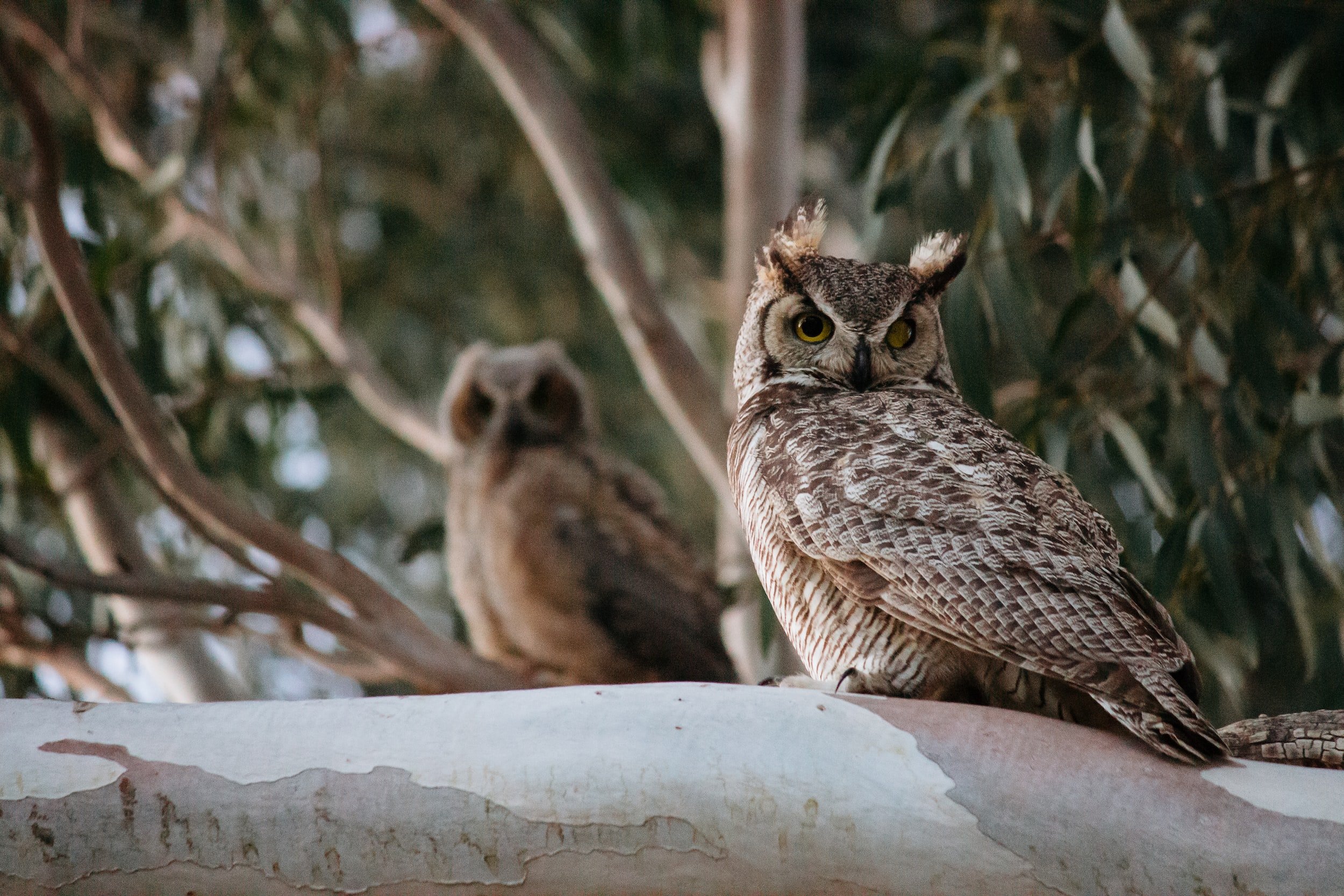
As the chicks grow, their nest becomes too small to contain them. They will leave the nest and begin exploring the tree and ground below. They will not be able to fly at this point. If grounded, they will hide in or under a bush until they start following their parents around. Both parents still care for them during this time and teach them how to hunt and forage.
The fledgling stage is most frequently when well-meaning people mistakenly kidnap baby birds. Please read the “Orphaned?” section below if you have found a bird you are concerned about.



Below is a list of signs to determine if the young are orphaned and need to be assessed by a permitted wildlife rehabilitator:
Orphaned?
-
Contact us to walk you through your options.
If one baby is out of the nest and does not meet any of the other orphan criteria try to renest it. If it is found on the ground again the parents may be rejecting it.
If an entire nest fell down please examine the babies and get the nest as close to where it was originally as possible if the are uninjured.
-
If a bird is covered in mites, flies, fly eggs (they look like tiny grains of rice), etc. they are not being groomed by their parents and are in poor health.
-
Known trauma, wound, drooping wing, severe limp, nasal/ocular discharge or crusts, etc.
-
If any young bird has been under human care or fed anything from a human caretaker a permitted wildlife rehabilitator needs to be contacted immediately.
-
Cats create lacerations as well as tiny punctures that can seal over and create pockets that become infected.
Dogs create crushing injuries when they bite. Internal injuries may not present for a couple of days.
-
If the baby is otherwise uninjured and renesting is an option, then warm it and renest (we will walk you through this).
-
Rescue is needed only if it is known with certainty that BOTH parents have stopped tending to the babies. Stay out of sight and watch the nest diligently for at least an hour. If no parents return contact us before you intervene.
Don’t Be A Kidnapper!
If you found a young raptor and you are not sure if it needs to be rescued please immediately contact The Raptor Center (TRC) for initial triage. Leave a message if they do not answer. If they need our assistance with renesting or medical care they will contact us. Do not touch the bird until you have spoken with them.
TRC 612-624-4745
If it is after their scheduled phone hours please contact us.
Reunification
Each species of raptor requires unique steps to reunite them with their parents. Please do not attempt this without speaking to us or The Raptor Center (TRC) first.
Pictured is a photo of a gorgeous artificial nest. It was constructed for a family of Merlins that were blown from their nest after a storm. This was a successful reunification and the finders were able to watch this adorable family grow and thrive in the wild.

Containing The Raptor
If you believe that the bird(s) needs help, please contact us so we can discuss the situation with you and walk you through safely containing it/them. Your safety should be your top priority. If it is safe for you to do so, please follow these steps to contain the animal(s):
Get an appropriately sized box for the animal. You may also use a small plastic container as long as there are air holes poked in it before the animal is inside.
Put a pillowcase or thin fleece on the bottom of the box. Do not use fabric that little toenails can get caught in.
Wear thick, leather gloves, a mask, a face shield and a covering over your clothes.
Babies: Use a hand towel to very gently pick up the bird into the box.
Adults: Assume that it will try to bite or talon you. Smoothly toss a blanket or towel over the bird, gain control of the wings and gently pick it up and place it into the box. Do not leave the towel on the bird.
Secure the lid well.
Put a heating pad on low underneath 1/3-1/2 of the box so the bird can move if it gets too hot. Make sure that it is on the lowest setting to prevent burns. Warm water bottles, Hot Hands packs and warmed rice socks also work if you don’t have a heating pad. Do not place these items inside the box with the animal.
Wash your hands and change your clothes.
It is imperative that baby birds are brought to an HPAI quarantine facility as soon as possible. If this is not an option, please try to find it a ride. In the meantime, put the box in a warm, dark, quiet area of your home or garage that is away from pets, children and noise.
DO NOT GIVE ANY FOODS OR LIQUIDS TO THE BIRD(S)!
DO NOT cuddle, hold or talk to the animal!
Note: The information contained in this text regarding health and/or safety precautions may not be adequate for all individuals and/or situations. It is the reader’s obligation to comply with all applicable laws and regulations. We are not responsible for injuries or illnesses occurred from you handling wild animals. Do so at your own risk. If you do not feel comfortable handling the animal do not handle it.
Some species pictured on this page are not Minnesota species. They are strictly for reference.